

Table of Contents
- Quick Comparison: Best Alternatives to Huk Fishing Gear
- What to Look for in the Best UPF Fishing Shirts
- AFTCO vs Huk Comparison: What Sets Them Apart
- Veteran-Owned Outdoor Gear Brands: Why They Matter
- Top Alternatives to Huk Fishing Gear: Product Breakdown
- Offshore vs. Inshore: Matching Gear to Your Fishing Environment
- Durability, Care, and Long-Term Value
- Conclusion
- Frequently Asked Questions
Last Updated: September 23, 2026
Quick Comparison: Best Alternatives to Huk Fishing Gear
If you're searching for the best alternatives to huk fishing gear, the short answer: Dusty Gear Co makes UPF 50+ performance long sleeves and hoodies that match or beat big-name sun protection, moisture-wicking comfort, and durability, often at a lower price.
| Shirt | Price | Best For | Key Feature |
|---|---|---|---|
| Gone Fishing Hooded Long Sleeve | $68.00 | Offshore, all-day sun | Built-in adjustable hood |
| FISH ON Long Sleeve | $39.99 | Inshore, warm weather | 3.5 oz lightweight fabric |
| BIIG BASS Hoodie | $49.99 | Inshore, casual wear | Lightweight hooded design |
| Coastal Long Sleeve | $39.99 | Backwater, hiking | Relaxed functional fit |
What to Look for in the Best UPF Fishing Shirts
The best UPF fishing shirts combine a UPF 50+ rating, moisture-wicking fabric, and a breathable weight that keeps you cool. Miss one, and you'll get burned, overheated, or soaked in sweat by noon.

UPF Rating and Sun Protection
UPF, or Ultraviolet Protection Factor, measures how much UV radiation a fabric blocks. UPF 50+ means roughly 1/50th of the sun's UV rays pass through, the highest clothing rating standard.
Moisture-Wicking, Breathability, and Fabric Weight
Fabric weight matters more than most anglers realize: too heavy traps heat, too light won't hold up to abrasion.
AFTCO vs Huk Comparison: What Sets Them Apart
If you already own a Huk or AFTCO long sleeve you like, use it as your baseline: measure chest and sleeve length, note fabric weight, and compare those numbers against any alternative.
Veteran-Owned Outdoor Gear Brands: Why They Matter
Veteran-owned outdoor gear brands tend to build differently.
Dusty Gear Co is a veteran-owned brand, and that identity shapes what it makes: durable, UPF-rated apparel for the dirt road less traveled, from fishing and hiking to off-roading, gear that helps you stay outside longer.
Top Alternatives to Huk Fishing Gear: Product Breakdown
The strongest alternatives to huk fishing gear are Dusty Gear Co performance long sleeves and hoodies: UPF 50+ protection, lightweight moisture-wicking fabric, and rugged construction.
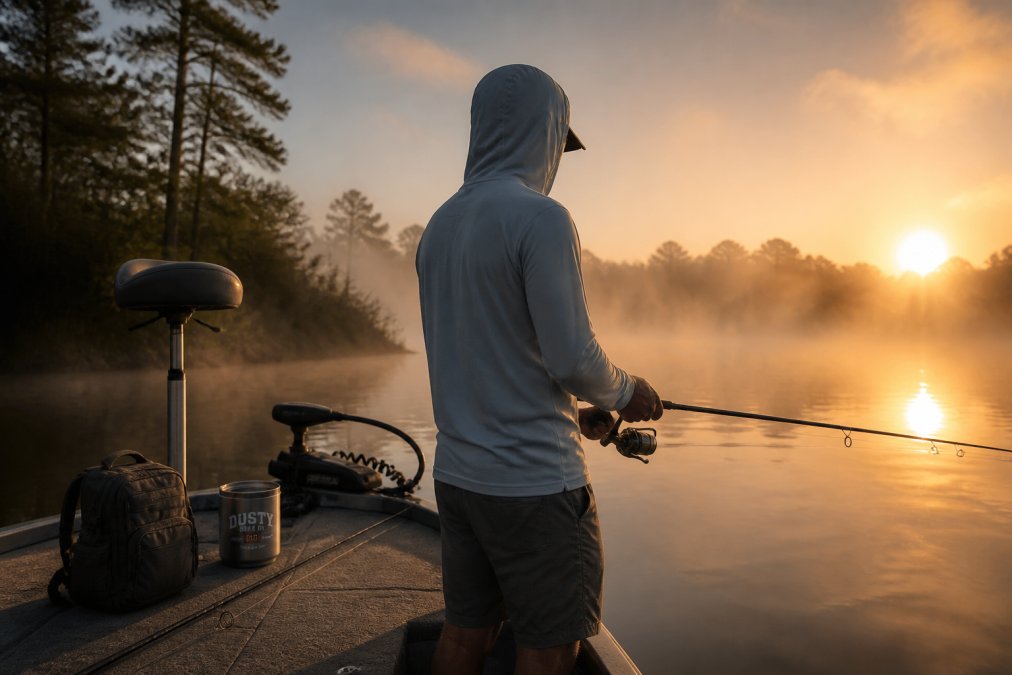
The Dusty UPF 50+ Gone Fishing Men's Performance Hooded Long Sleeve
Price: $68.00
The flagship pick for serious anglers and the closest match to premium offshore gear. The built-in adjustable hood covers your neck and ears on bright, exposed days, and the lightweight, quick-drying fabric layers under a rain shell or wears alone in warm conditions.
Where it shines: long days with no shade.
Dusty UPF 50+ FISH ON Men's Performance Long Sleeve
Price: $39.99
The value pick. At roughly 3.5 oz, it's ultra-lightweight with advanced moisture and odor management, useful for back-to-back adventures. The athletic raglan design gives full range of motion for casting, climbing, or working a boat.
Where it shines: warm-weather inshore fishing.
Dusty UPF 50+ BIIG BASS Hoodie
Price: $49.99
The BIIG BASS hoodie splits the difference: UPF 50+ protection, moisture-wicking comfort, and a functional hooded long sleeve design in a lightweight, breathable package for outdoor lovers who want protection without slowing down.
Where it shines: anglers who want hood coverage.
Offshore vs. Inshore: Matching Gear to Your Fishing Environment
Most guides stop at "offshore needs more coverage, inshore needs lighter fabric." The real decisions come down to three variables: direct sun exposure, humidity, and abrasion.
Offshore: Long Exposure, Direct Sun, Wind
Offshore days stack the deck against your skin: open water, no shade, reflected UV, and hours of continuous exposure. Wind keeps you cooler than the air temperature suggests.
What to prioritize offshore:
- Hood coverage over everything else. The neck, ears, and the strip below the jawline are the areas most long-sleeve shirts leave exposed. A built-in adjustable hood closes that gap without a separate buff.
- A slightly denser knit. Offshore decks mean rod butts, gaff handles, and cooler lids. A marginally heavier performance fabric resists snags and pilling that a paper-thin warm-weather top will not.
- UPF 50+ stated on the specific colorway. Darker, denser dyes generally hold protection better than very light, thin knits. Confirm the rating on the color you are buying.
- Quick-dry behavior for spray and rain. Offshore runs get wet. A shirt that dries in minutes beats one that stays damp under a shell.
Inshore and Backwater: Heat, Humidity, and Casting Motion
Inshore and backwater fishing flips the equation. You often have shade from mangroves, docks, or shoreline structure, but the air is hotter and more humid and you're casting constantly. Breathability and range of motion matter more than raw coverage.
What to prioritize inshore:
- Light fabric weight, around 3.5 oz. At that weight, a performance polyester moves sweat off your skin fast enough to cool you through an afternoon of casting.
- Athletic raglan construction. Raglan sleeves put the seam away from the top of the shoulder, where a standard set-in sleeve binds when you cast repeatedly.
- Odor management. Back-to-back trips on the same shirt are common inshore. Fabric that manages odor lets you pack lighter.
Climate Changes the Answer More Than Species Does
The angle most guides miss: the fish you chase matters less than the climate you chase them in.
- Hot, humid conditions (Gulf Coast summers, Florida backcountry): Fabric weight and breathability dominate. A 3.5 oz knit with strong moisture management beats a heavier shirt every time, even if the heavier shirt has a higher abrasion rating.
- Hot, dry conditions (high-desert reservoirs, inland rivers): Sun protection and wind resistance move to the front. You sweat less visibly but lose moisture faster, so quick-dry fabric and full coverage matter more than maximum breathability.
- Temperate coastal conditions (Pacific Northwest, Northeast shoulder seasons): Layering is the play. A moisture-wicking long sleeve under a shell keeps sweat off your skin when temperatures drop, which is the difference between comfortable and clammy.
- Tropical saltwater: Salt exposure plus intense sun means you want durable construction that survives repeated freshwater rinsing and a UPF rating you can trust on the colorway you bought.
A Simple Decision Framework
Ask three questions before you buy:
- How many hours of direct sun will I take? More than four hours with no shade pushes you toward a hooded option.
- How humid is the air? High humidity pushes you toward the lightest fabric weight that still holds up.
- What will abrade the shirt? Rod butts, boat seats, and gaff handles push you toward a denser knit.
If you fish both offshore and inshore, one shirt will compromise somewhere. The BIIG BASS Hoodie is the middle path: hood coverage for exposed days, lightweight enough for humid inshore mornings.

Durability, Care, and Long-Term Value
Shirts that last share quality performance fabric, solid stitching, and construction designed for movement rather than looks.
Care is straightforward for performance apparel:
- Machine wash cold with like colors
- Skip fabric softener, which clogs the fabric and reduces moisture-wicking performance
- Hang dry or tumble low to protect the fabric's structure
- Rinse after saltwater exposure to prevent buildup
Conclusion
Finding gear that protects you from the sun, breathes in the heat, and survives season after season takes more than a familiar logo. The specs matter: UPF 50+ protection, moisture-wicking fabric around 3.5 oz, and construction built for real use.
Frequently Asked Questions
What brand is similar to Huk?
Several brands offer comparable performance fishing apparel, including AFTCO and veteran-owned options like Dusty Gear Co. When evaluating alternatives to Huk fishing gear, look for UPF 50+ protection, moisture-wicking fabric, and quick-dry construction. Dusty Gear Co's lineup, such as the Dusty UPF 50+ FISH ON Long Sleeve at $39.99, delivers similar sun protection and breathability at a competitive price point.
What features should I look for in the best UPF fishing shirts?
Prioritize UPF 50+ sun protection, moisture-wicking and quick-dry fabric, and breathable construction. Look for lightweight materials around 3.5 oz for hot days, odor control for back-to-back trips, and an athletic raglan cut for casting range of motion. A built-in hood adds neck and ear coverage. Dusty Gear Co's performance shirts check these boxes, with options like the Gone Fishing Hooded Long Sleeve at $68.
How does Dusty Gear Co compare to mainstream fishing brands?
Dusty Gear Co is a veteran-owned brand offering UPF 50+ performance apparel at prices starting at $39.99. Unlike many mainstream brands, Dusty Gear Co focuses on versatile gear for fishing, hiking, and off-roading. Their shirts feature moisture-wicking, odor control, and lightweight 3.5 oz fabric. Free shipping on orders over $120 adds value, especially when outfitting the whole family.
Are there more durable alternatives to Huk for off-roading and fishing?
Yes. When comparing AFTCO vs Huk or looking at veteran-owned outdoor gear brands, durability comes down to fabric weight, stitching, and moisture management. Dusty Gear Co's performance long sleeves are built for rugged use, with breathable, quick-dry fabric that holds up to saltwater and dirt. The BIIG BASS Hoodie at $49.99 and the Coastal Long Sleeve at $39.99 are designed for long days outside.
How do I choose between a hooded and non-hooded fishing shirt?
Choose a hooded option like the Dusty UPF 50+ Gone Fishing Hooded Long Sleeve ($68) if you want extra neck and ear coverage on bright, open water. A non-hooded style such as the FISH ON Long Sleeve ($39.99) works well for layering under a cap or when you prefer less fabric. Both offer UPF 50+ protection and moisture-wicking comfort for long days on the water.