

Table of Contents
- Quick Comparison: Best Outdoor Gear for Rugged Terrain
- How We Evaluated Gear for Rugged Terrain
- The Big Three: Pack, Tent, and Sleep System
- Terrain-Specific Footwear Selection for Rocky, Uneven Ground
- Best Long Lasting Outdoor Adventure Clothing for Layering
- Navigation, Lighting, and Hydration Tools for Multi-Day Treks
- How to Maintain Outdoor Gear for Longevity
- Frequently Asked Questions
Last Updated: September 30, 2026
Quick Comparison: Best Outdoor Gear for Rugged Terrain
Finding the best outdoor gear for rugged terrain comes down to matching your kit to the ground under your feet, not a spec sheet. This guide from Dusty Gear Co breaks down packs, footwear, layers, and tools by terrain type.
| Category | Top Pick | Price | Best For |
|---|---|---|---|
| Day pack | The Dusty Trailhead Pack | $65.00 | Scree, rock, and mixed terrain |
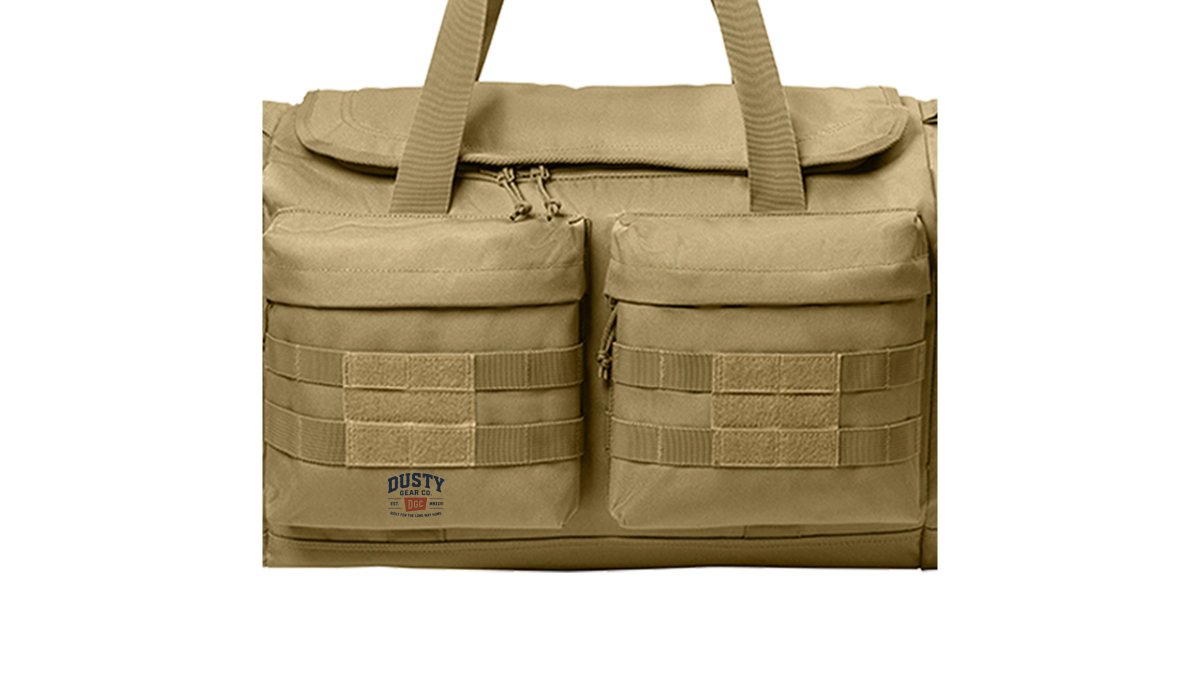
| Duffel | The Dusty Expedition Duffle | $67.99 | Multi-day basecamp hauls |
| Sun layer | The Dusty WORK HORSE UPF 30+ Hoodie | $59.99 | Long days in exposed sun |
| Technical tee | The Dusty Trail Guide UPF Shirt | $68.00 | Hiking, fishing, scrambling |
| Headwear | The Dusty UPF 50+ Trail Flat Bill Hat | $40.00 | Full-sun ridgelines |
How We Evaluated Gear for Rugged Terrain
We judged every item on abrasion resistance, load distribution, and durability after repeated exposure to dirt, rock, and moisture. Weight-to-durability ratio carried the most weight.

The Big Three: Pack, Tent, and Sleep System
Your pack, shelter, and sleep system decide whether a multi-day trek feels manageable or miserable, and whether your kit survives. Get these three right and everything else is detail work.
The Weight-to-Durability Ratio: The Number Most Guides Skip
Rugged terrain forces a trade-off no spec sheet resolves: every ounce of abrasion resistance costs weight, and every ounce shaved raises mid-trek failure risk. The useful question is "what's the lightest thing that will still be intact at the end of this route?"
A framework most experienced backpackers use:
- Denier per pound of load. A 600D polyester pack fabric handles granite and scree abrasion far better than a 210D ripstop, but it adds measurable weight. If your total load is under about 20 lbs and your route is mostly dirt and duff, 210D-420D is usually enough. Above 25 lbs, or on routes with sustained rock contact, step up to 500D-1000D.
- Frame vs. frameless. Frameless packs save weight but transfer every load shift straight to your shoulders. On uneven ground where you're constantly adjusting balance, a simple internal frame or framesheet pays for its weight in stability.
- Repairability as a durability metric. A pack with removable straps, replaceable buckles, and field-serviceable zippers outlasts a lighter pack with glued seams and proprietary hardware, even if the lighter pack wins on paper.
Packs Built for Scree and Rock
The Dusty Trailhead Pack ($65.00) is our top pick for rugged day use. Its 600D polyester canvas resists the abrasion that shreds lighter fabrics on granite and scree.
Shelter and Sleep Systems That Handle Alpine Conditions
Terrain-Specific Footwear Selection for Rocky, Uneven Ground
Footwear is where terrain type matters most. Scree, wet roots, and slab rock each demand different outsole grip and support.

Ankle Support vs. Trail Runners on Technical Terrain
Trail runners win on weight and breathability for packed dirt. On scree and uneven rock, ankle support and a stiffer outsole reduce the roll risk that ends trips early.
Match tread to surface:
- Loose scree: deep lugs, stiff midsole
- Wet roots and mud: sticky rubber compound, aggressive tread
- Slab rock: smeared rubber, minimal lugs
- Mixed forest trails: moderate lugs, flexible forefoot
Best Long Lasting Outdoor Adventure Clothing for Layering
The best long lasting outdoor adventure clothing works as a system, not a single jacket. Three layers handle almost every condition.
Base Layer, Insulating Layer, and Waterproof Shell
Your base layer manages moisture. Moisture-wicking synthetics move sweat off your skin so you stay warm when you stop moving.
Navigation, Lighting, and Hydration Tools for Multi-Day Treks
Navigation, lighting, and hydration keep a multi-day trek safe. Each has a failure mode you can plan around, and each can be repaired or improvised in the field if you know the mechanism before it breaks.
Navigation: Redundancy Isn't a Backup, It's the System
Carry a paper topographic map and baseplate compass alongside any GPS app, batteries die, paper doesn't. On scree and slab your hands are busy with balance, so a wrist-mounted compass or a map case clipped to your pack strap beats digging a compass out of a pocket mid-scramble.
Match your navigation tool to the terrain's failure profile:
- Canyon and dense forest: GPS signal bounces and drops. A compass bearing taken before you enter is your fallback.
- Exposed ridgelines: Wind rips map cases off carabiners. Use a lanyard, not a clip.
- Scree fields: Landmarks shift visually as you move. Take bearings at fixed intervals, not just at junctions.
Lighting: Lumens Are the Wrong Spec
Match headlamp output to use, not the biggest number on the box. A low setting (5-20 lumens) handles camp chores without blinding your tent partner; a high beam (200+ lumens) is for night navigation. The spec that matters on rugged terrain is runtime at usable output, a headlamp that dims to nothing after two hours is worse than a dimmer one that holds steady all night.
Hydration: Hands-Free Beats Bottles on Technical Ground
Hydration systems beat bottles on technical terrain because they keep your hands free for balance. Pair a bladder with a filter so you can refill from streams instead of carrying every liter.
Rugged-terrain specifics:
- Bladder abrasion. A bladder pressed against rock inside a pack can puncture. A simple stuff sack or padded sleeve around it is cheap insurance.
- Filter freezing. In shoulder-season alpine conditions, a filter left exposed overnight can freeze and crack. Sleep with it, or carry it in an inside pocket.
- Quick-connect fittings. These are the most common leak point. Carry a spare O-ring or a length of tubing as a field fix.
Field Repair: The Kit That Saves the Trip
Most gear guides tell you what to buy, not what to carry so it still works on day three. A minimal rugged-terrain repair kit fits in a quart bag:
- Ten feet of 2 mm cord (shelter tie-outs, pack strap repair, bootlace replacement)
- Two spare side-release buckles sized to your pack
- A few feet of duct tape wrapped around a trekking pole
- A needle and heavy-duty thread, or a Speedy Stitcher-style awl for pack and boot seams
- A spare headlamp strap or length of elastic cord
- A patch kit for your sleeping pad and bladder
- A small multi-tool with pliers and scissors
How to Maintain Outdoor Gear for Longevity
Learning how to maintain outdoor gear for longevity comes down to cleaning, drying, and storing with intent. Most gear fails from neglect, not use.
A simple routine:
- Rinse packs and duffles after dusty trips to clear abrasive grit from zippers
- Hand-wash technical layers in mild detergent, never fabric softener
- Air-dry everything fully before storage to prevent mildew
- Re-waterproof shells with a spray treatment each season
- Inspect seams, buckles, and strap anchors before every multi-day trek
- Store gear loosely, never compressed, to protect insulation loft
Frequently Asked Questions
What is the 3-layer rule for hiking in rugged terrain?
The 3-layer rule means wearing a base layer to wick moisture, an insulating layer to trap heat, and a waterproof shell to block wind and rain. On rugged terrain where weather shifts fast, this system lets you add or remove pieces as conditions change. A moisture-wicking base layer keeps sweat off your skin, a synthetic or down insulating layer holds warmth, and a breathable shell protects against rain and wind. This setup works for everything from a day hike to a multi-day trek.
What features should I look for in footwear for rocky, uneven ground?
Prioritize ankle support, outsole grip, and abrasion resistance. A stiffer midsole protects your feet from sharp rocks, while deep lugs on the outsole improve traction on scree and wet roots. Look for a reinforced toe cap and a heel brake for downhill control. Breathability matters too, especially on long approaches. Waterproof membranes help in wet conditions but can trap sweat, so pick based on your climate. Replace footwear when the midsole compresses or the outsole wears flat.
How do I maintain high-performance outdoor clothing for longevity?
Wash technical clothing with a mild detergent and avoid fabric softener, which clogs moisture-wicking fibers. Use cold water and air dry when possible. For waterproof shells, reapply a DWR (durable water repellent) treatment when water stops beading. Store gear clean and dry, away from direct sunlight. Check zippers and seams regularly, and repair small tears before they spread. These steps keep UPF protection, breathability, and water resistance working longer, which matters on rugged terrain where gear takes a beating.
What are the essential safety items for off-trail exploration?
Carry a first aid kit, emergency shelter, headlamp with extra batteries, navigation tools (GPS and topographic maps), and a water filtration system. A satellite messenger or personal locator beacon is smart for remote areas with no cell service. Pack a repair kit for gear and a fire starter. For rugged terrain, trekking poles reduce fall risk and save your knees on steep descents. Always tell someone your route and expected return time. These items weigh little but make a big difference when plans go sideways.
What is the Big 4 in hiking gear and why does it matter for rugged trails?
The Big 4 are your pack, shelter, sleep system, and footwear. These items carry the most weight and have the biggest impact on comfort and safety. On rugged terrain, a pack with load distribution and compression straps keeps weight stable on uneven ground. A durable shelter handles wind and rain. A sleep system rated for the conditions keeps you warm. Footwear with traction and ankle support prevents injuries. Getting the Big 4 right means the rest of your kit falls into place.
Rugged terrain exposes weak gear fast, and replacing it every season gets expensive. Dusty Gear Co builds veteran-owned, UPF-rated apparel and durable bags for exactly this kind of ground, from the 600D canvas Trailhead Pack to the UPF 50+ Trail Flat Bill Hat. Every piece is made to keep you outside longer on the dirt road less traveled, with free shipping on orders over $120. Shop Dusty and gear up for the long way home.